We’ve seen the rise of the intellectual influencer become internet’s hottest discussion topic. Vogue just wrote about it, but internet nerds like myself have spotted this pattern emerge since at least post-COVID.
Across Instagram, YouTube, podcasts, and newsletters on Substack, there is now an enormous audience for discussions of philosophy, history, religion, politics, literature, culture, and psychology. Millions of people spend their free time consuming content about ideas. They watch videos explaining political theory, listen to long-form conversations about historical events, follow accounts dedicated to literature, and subscribe to creators who spend their days discussing concepts that would once have been confined to classrooms and seminar rooms.
Has that rise happened in vacuum? No. For one part, it definitely is a sub-culture in response to an endless scroll and mindless entertainment even BEFORE AI slop entered the picture. But I think the picture goes deeper and may be connected to what’s happening with education at large.

Recent reporting has documented a trend across multiple countries – the humanities departments are dying.
In the United States, The Guardian reported on universities cutting majors, merging departments, and reducing faculty positions across disciplines such as history, English, religious studies, sociology, ethnic studies, and gender studies. In England, Times Higher Education described a growing number of humanities programmes being suspended or downsized as institutions respond to financial pressures and changing student demand. In China, the South China Morning Post reported that universities have cut more than 12,000 degree programmes as part of a broader effort to align higher education with artificial intelligence and emerging industries.
India presents a slightly different picture. We have not witnessed the same scale of high-profile humanities closures that have made headlines in the United States or England. Yet the underlying concern remains familiar. Low enrolment numbers have become a recurring challenge for humanities departments (and have always been for our engineering-obsessed nation), and individual colleges have begun discussing whether certain courses remain viable. A recent example reported by the Times of India involved a college considering the discontinuation of humanities electives because too few students were signing up. The courses where they remain available, but fewer students choose them.
The reasons are all the same. It’s not economically fruitful to study these areas anymore.
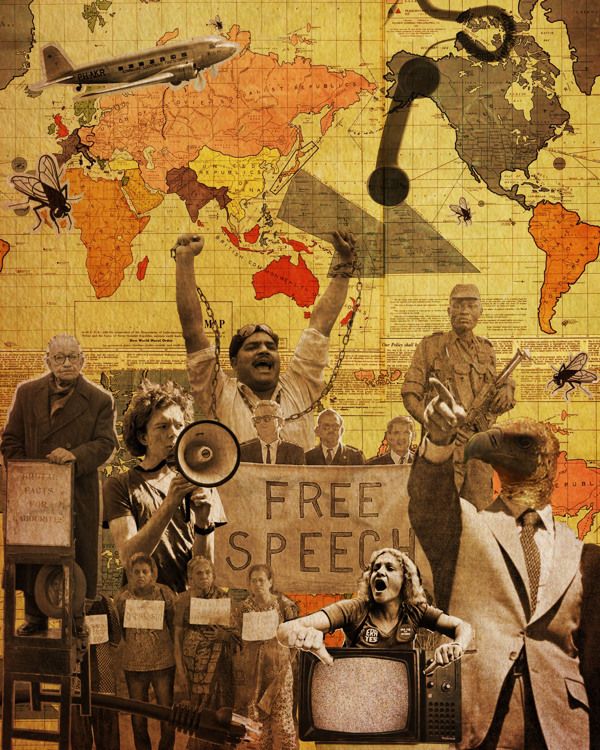
This should immediately complicate the narrative that people no longer care about the humanities. If anything, the popularity of intellectual creators suggests the opposite.
The desire to understand ourselves, our societies, our histories, and our beliefs remains remarkably strong. Human beings have always sought explanations for the world they inhabit and for the lives they lead within it. The humanities emerged from that impulse, and it is difficult to imagine a future in which that impulse disappears.
For that reason, I do not believe the humanities are in danger of being eradicated. The need they address is too fundamental.
Before we ask how to build a machine, we ask why we build it.
Before we ask how to optimise a system, we ask what that system is for. Before we ask what is possible, we ask what is desirable.
The desire to understand what it means to be human is among our oldest intellectual instincts, and it is difficult to imagine any technological future that renders that question obsolete. In fact, the rise and rise of AI makes those questions even more prevalant – so ironically, AI replacing the study of humanities seems counter-intuitive.
What concerns me is not the existence of intellectual influencers. Many of them perform an important public service. They introduce audiences to books, ideas, debates, and traditions that they might never have encountered otherwise. They can democratise access to knowledge, create intellectual communities, and encourage curiosity in people who may never set foot in a university classroom again.
The difficulty arises when we begin to confuse byte-sized exposure with engagement – and an influencer for an academic.
Following an intellectual influencer is not the same thing as studying a subject. Watching a series of videos about philosophy is not equivalent to reading philosophy. Consuming historical content does not necessarily teach someone how historians evaluate evidence, construct arguments, or interpret conflicting accounts – or make you the wiser for it. A person can spend years surrounded by intellectual content while never developing the habits of inquiry that humanities education is designed to cultivate. What we can do at best when study is delivered transiently like information – is collect facts and trivia points, with no muscle to connect those dots.
That distinction matters because humanities education has never been primarily about information. Information is the easiest part. Humanities education is about methods of thinking. It is about learning how to interrogate sources, situate arguments within historical contexts, recognise ambiguity, evaluate evidence, and remain open to revision. These are not skills that emerge automatically from exposure to ideas. They require sustained engagement.
The architecture of social media often works against precisely those habits. Intellectual creators operate within systems that reward immediacy, visibility, certainty, and emotional intensity. The algorithms tend to favour strong reactions over careful qualifications. They reward conclusions more readily than they reward uncertainty. As a result, even thoughtful creators can find themselves pushed toward forms of communication that prioritise speed over reflection – and frame arguments to polarise not understand.
This is not merely a theoretical concern. Public controversies involving intellectual creators often emerge from exactly this tension. A piece of news breaks, a historical claim begins circulating, or a cultural controversy erupts online. The pressure to respond quickly becomes immense. In many cases, creators find themselves commenting before evidence has been fully examined, using anger for style, stripping nuance, no considering competing narratives, or consulting relevant expertise. The issue is not necessarily bad faith. More often, it is the consequence of an ecosystem that rewards reaction.
Humanities scholarship, by contrast, is built around the possibility that our first interpretation may be wrong. It encourages patience with complexity and discomfort with certainty. It insists that evidence deserves more attention than instinct. These values can feel frustratingly slow in a media environment that prizes speed, but they remain essential to serious intellectual work.
No one develops a meaningful understanding of Plato, Ambedkar, Fanon, Arendt, or the Vedas through short-form content alone. At best, such content can provide orientation. It can point toward a text, a thinker, an archive, a debate, or a tradition of inquiry.
The irony is that the growing popularity of intellectual creators may inadvertently contribute to the very pressures facing humanities departments. If intellectual content creates the impression that complex subjects can be fully accessed through summaries and explainers, it becomes easier to believe that formal study is unnecessary.
Students may decide that they can acquire the same knowledge elsewhere. Lower enrolments then become evidence that the humanities lack value, leading institutions to reduce investment, which in turn reinforces the perception that these disciplines are declining. The cycle begins to sustain itself. Already has.
In many ways the rise of the intellectual influencer also mirrors the corporatization of education at large. For subjects that rely on impartiality and objectivity, this could perpetuate biases, consumerism, and everything that humanity tries to at least provide a check and balance against.
In fact, today, a lot of our thinking, philosophy, cultural meaning is derived from branded podcasts, who are using the garb of the intellectual influencer to further a corporate motive.
This does not mean intellectual creators are responsible for the crisis facing the humanities. The causes are far broader and include political interventions, economics, public policy, labour markets, university funding structures, and cultural attitudes toward education.
The creators I find myself returning to are often those who remain accountable to a discipline, a body of evidence, or a tradition of scholarship. Some are academics who have embraced public platforms. Figures such as Adam Aleksi, Eric Chopra, Pumla Dineo Gqola (who has not posted in a white), demonstrate that public engagement and scholarly rigour need not be opposing commitments.
I like Amit Varma’s podcast for reflected conversations, independent media houses that have embraced multimedia, like the Vox. I also did sign up for a few online courses but without a solid community, lively debate and discussion, learning these subjects felt lonely.
What unites these good intellectual influencers is not a shared ideology or methodology. It is a shared respect for the disciplines from which their work emerges. They treat intellectual life not as a collection of opinions but as a process of inquiry.
They understand that knowledge is not simply something to be distributed. It is something to be pursued. I try to do that with Purple Pencil Project too.
Perhaps that is where the future of the humanities ultimately resides. Not exclusively within universities and not exclusively online, but in the continuing effort to preserve the habits of thought that humanities education was designed to cultivate. The institutions may change. The platforms will certainly change. The formats through which ideas circulate will continue to evolve. Yet the underlying question remains remarkably stable.
Human beings want to understand what it means to be human.
As long as that question continues to matter, the humanities will continue to matter as well.